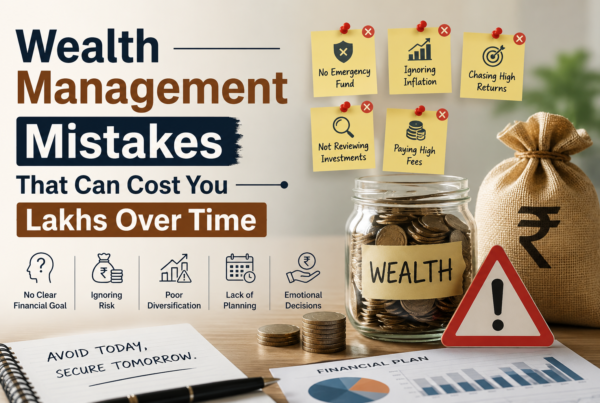

Most people in India grow up with a simple financial belief: save money, keep it safe, and avoid risk. That’s why savings accounts, fixed deposits, and even cash holdings still dominate personal finance habits. But here’s the uncomfortable truth—money that stays idle doesn’t stay safe; it slowly loses value.
In today’s economic environment, where inflation consistently eats into purchasing power, the real question is not “Is stock investing risky?” but rather “Is not investing even riskier?”
This is exactly why more individuals are choosing to invest in stocks—not for speculation, but for structured, long-term wealth creation.
Let’s understand this deeply, not just from a theoretical perspective, but through real-world Indian financial behavior, practical examples, and clear reasoning.
Why Idle Money Is a Silent Wealth Destroyer
Before talking about stocks, it’s important to understand what happens when money is not invested.
Imagine you keep ₹10 lakh in a savings account for 10 years. It feels secure—you can access it anytime, and the bank gives you interest. But if inflation averages around 6%, the cost of living will almost double in that period.
That means:
- What ₹10 lakh can buy today may require ₹18–20 lakh in the future
- Your money has grown slightly, but your purchasing power has shrunk significantly
This is the biggest hidden risk—you are losing wealth without realizing it.
Idle money creates three core problems:
1. It Fails to Grow Meaningfully
Savings accounts and even FDs provide limited returns. They protect capital but don’t build wealth.
2. It Loses Real Value Due to Inflation
Even if your balance increases, your ability to buy goods and services declines.
3. It Misses Opportunity
While your money sits idle, businesses are growing, markets are expanding, and investors are earning returns.
Why Stocks Offer a Strong Alternative
When you invest in stocks, you are not just putting money into a market—you are allocating capital to businesses that are actively generating revenue, expanding operations, and increasing profits.
This fundamental difference is what makes equities powerful.
Let’s explore the real reasons in depth.
1. Can Stocks Truly Help You Beat Inflation?
Yes—and this is where equities outperform almost every traditional instrument.
In India, long-term returns from indices like NIFTY 50 have historically been in the range of 10–12% annually. This is significantly higher than inflation.
But the real benefit is not just “higher returns”—it’s real wealth creation.
What does that mean in practical terms?
If inflation is 6% and your investment grows at 12%, your real return is about 6%. That difference is what builds wealth.
Now compare that with:
- Savings account: ~3% return → negative real return
- FD: ~6–7% return → barely matches inflation
Stocks don’t just preserve your money—they expand its future potential.
2. How Does Compounding Actually Work in Stocks?
Compounding is often explained in one line, but rarely understood deeply.
When you invest in stocks, your returns are not linear—they are layered over time.
Let’s break it down:
- Year 1: ₹1,00,000 grows to ₹1,12,000 (12% return)
- Year 2: Returns apply on ₹1,12,000, not ₹1,00,000
- Year 10+: Growth accelerates significantly
What makes stocks unique is that:
- Companies reinvest profits into expansion
- Share prices reflect long-term growth
- Dividends can be reinvested
So you are not just earning returns—you are participating in a compounding system driven by economic growth.
This is why early investing matters more than large investing.
3. Why Do Stocks Deliver Better Long-Term Returns?
This is not accidental—it’s structural.
Stocks represent businesses. And businesses:
- Increase prices over time (passing inflation to consumers)
- Expand into new markets
- Innovate and improve efficiency
As a result, profits grow. And when profits grow, stock prices tend to rise.
That’s why equities outperform assets like gold or FDs over long periods.
Think about it this way:
- Gold stores value
- FD preserves capital
- Stocks create wealth
4. Is It Really Easy for Beginners to Invest Today?
This is one of the biggest changes in the Indian financial ecosystem.
Earlier, investing required brokers, paperwork, and high capital. Today, apps like Zerodha Kite, Groww, and Upstox have simplified everything.
But the real transformation is not just technological—it’s psychological.
Today:
- You can start with small amounts
- You can learn while investing
- You have access to company data, research, and insights
The barrier is no longer access—it’s understanding and discipline.
5. Can Stocks Generate Passive Income?
Yes—but not in the way most beginners imagine.
Passive income from stocks comes primarily through dividends and long-term capital appreciation.
How it works:
Some companies distribute profits regularly. If you hold such stocks:
- You receive periodic income
- Your capital continues to grow
Over time, this creates a dual benefit:
- Income + wealth growth
This becomes especially powerful during retirement planning.
6. What Does It Mean to “Own” a Stock?
This is often overlooked but extremely important.
When you invest in stocks, you become a partial owner of a company.
That means:
- If the company grows, your investment grows
- If the company struggles, your investment is affected
This ownership mindset changes how you invest.
Instead of chasing price movements, you start evaluating:
- Business quality
- Revenue growth
- Industry potential
This shift—from trading to ownership—is what separates successful investors from beginners.
7. How Liquidity Gives Stocks a Major Advantage
Liquidity is one of the most practical benefits of stock investing.
Unlike real estate or long-term deposits:
- You can sell stocks quickly
- Money is credited within a short time
- There’s no lock-in (in most cases)
This flexibility is crucial in real-life situations—emergencies, opportunities, or financial adjustments.
8. Can You Start Small and Still Build Wealth?
Absolutely—and this is where most people underestimate the power of consistency.
You don’t need ₹10 lakh to begin.
You can start with:
- ₹500 per month
- Gradually increase investment
- Stay consistent over years
This approach aligns perfectly with Indian income patterns, especially for salaried individuals.
Over time, small contributions combined with compounding create substantial wealth.
Stocks vs Idle Money: A Practical Comparison
| Factor | Idle Money (Savings/FD) | Stocks |
| Growth Potential | Low | High |
| Inflation Impact | Negative | Positive |
| Liquidity | Medium | High |
| Wealth Creation | Limited | Strong |
| Risk | Low | Moderate |
The conclusion is clear—the risk of not investing is often greater than the risk of investing.
Common Mistakes People Make While Investing
Even when people decide to invest in stocks, they often approach it incorrectly.
1. Treating Stocks Like Gambling
Buying based on tips or social media trends leads to poor outcomes.
2. Focusing Only on Short-Term Gains
Markets fluctuate. Wealth is built over years, not weeks.
3. Panic Selling During Market Falls
Corrections are normal. Emotional decisions destroy long-term returns.
4. Ignoring Research
Understanding the business is more important than tracking the price.
5. Lack of Patience
Consistency matters more than timing.
When Should You Avoid Stock Investing?
Stock investing is not suitable in every situation.
You should avoid or limit exposure if:
- You need money within 1–2 years
- You cannot tolerate volatility
- You don’t have an emergency fund
In such cases, safer options provide stability.
A Practical Approach for Indian Investors
If you’re planning to invest in stocks, follow a structured mindset:
- Start with fundamentally strong companies
- Invest regularly instead of lump sum timing
- Think long-term (minimum 5 years)
- Diversify across sectors
- Focus on learning, not quick profits
This approach reduces risk and improves consistency.
Frequently Asked Questions (FAQs)
Is it safe to invest in stocks in India?
Yes, when approached with proper research and a long-term perspective. Markets are regulated, and transparency has improved significantly.
How much money do I need to start?
You can begin with a small amount. Even ₹500 is enough to get started.
What is better: FD or stocks?
FDs offer stability but limited returns. Stocks provide higher growth potential with moderate risk.
How long should I stay invested?
Ideally 5–10 years or longer to fully benefit from compounding.
Do I need to track the market daily?
No. Long-term investors benefit more from consistency than frequent monitoring.
Final Thoughts: Shift from Saving to Growing
The traditional mindset of “saving money” is no longer enough in today’s economy. The focus must shift to growing money.
Choosing to invest in stocks is not about taking unnecessary risks—it’s about making informed decisions to protect and expand your financial future.
Idle money may feel safe today, but over time, it limits your potential. Stocks, when approached with discipline and patience, offer a path to real wealth creation.
The difference between financial struggle and financial freedom often comes down to one decision—whether you let your money sit, or make it work.